Your AI Works. Your Team Doesn’t Use It.

Your AI assistant works. That’s not the problem. The problem is that nobody is actually using it.
It passes the demo, the answers are solid, and stakeholders sign off. It looks like a success. Then it goes live, and usage quietly drops. People tried it, found it helpful enough, and then returned to their usual way of working. No complaints. No escalation. Just silence.
This is usually where most companies get it wrong. The issue is labeled as adoption. More training is proposed. Internal nudges are introduced, but none of it changes much. Because the issue isn’t adoption.
Using the assistant creates more work than it removes.
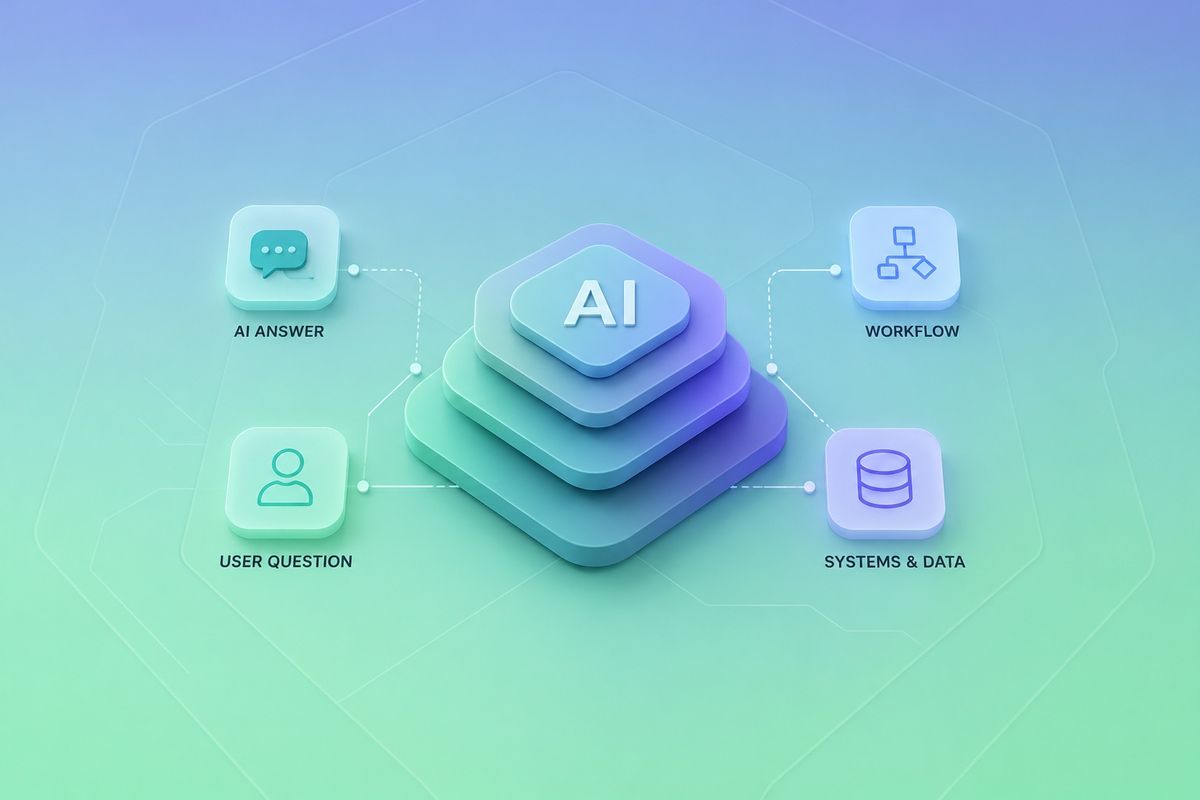
A user asks a question and gets an answer. Then they have to stop, read it, decide if they trust it, and manually apply it somewhere else: another system, another tool, another conversation. The AI helps, but only partially. The rest of the process is still on them.
Over time, that trade-off becomes obvious. Saving time on information retrieval doesn’t justify adding friction to everything that follows. So people adapt. They route around it. That decision exposes the real problem.
The assistant isn’t failing. It’s simply not part of the workflow.
When your agent sits next to the process, it’s optional. It depends on someone choosing to use it and doing the extra step of translating its output into action. That extra step is exactly where things get stuck. It’s also where our system-building work begins.
If your team isn’t using AI, it’s worth asking a simpler question: What happens after AI gives an answer?
If the answer is “a person takes it from there,” you don’t have a system.
Most teams don’t know exactly where that break happens. That’s usually the first thing worth mapping. → Schedule a System Review